
Roseau County Has No Official Multi-Day Blotter
The Sheriff's Office page links a current Inmate List. No booking blog sits beside it. The county publishes no multi-day arrest feed and no city police blotter. Treat the list as a live custody roster only. Its historical reach stays unknown, since the office promises nothing beyond current status. A person can leave the roster after release or transfer. The arrest record itself still exists at the agency. A newspaper story, meanwhile, outlives a changed government page. An empty search proves nothing about anyone's history.
Roseau County publishes no multi-day blotter. So for a weekend or holiday, write down the exact date range and ask each agency directly for its arrest and booking data. One Monday roster will not cover every arrest made from Friday through Sunday.
How to Build a Roseau Arrest Timeline
- Check the official Inmate List for anyone still in local custody.
- Identify whether Roseau Police, Warroad Police, the Sheriff, State Patrol, DNR, or another agency made the arrest.
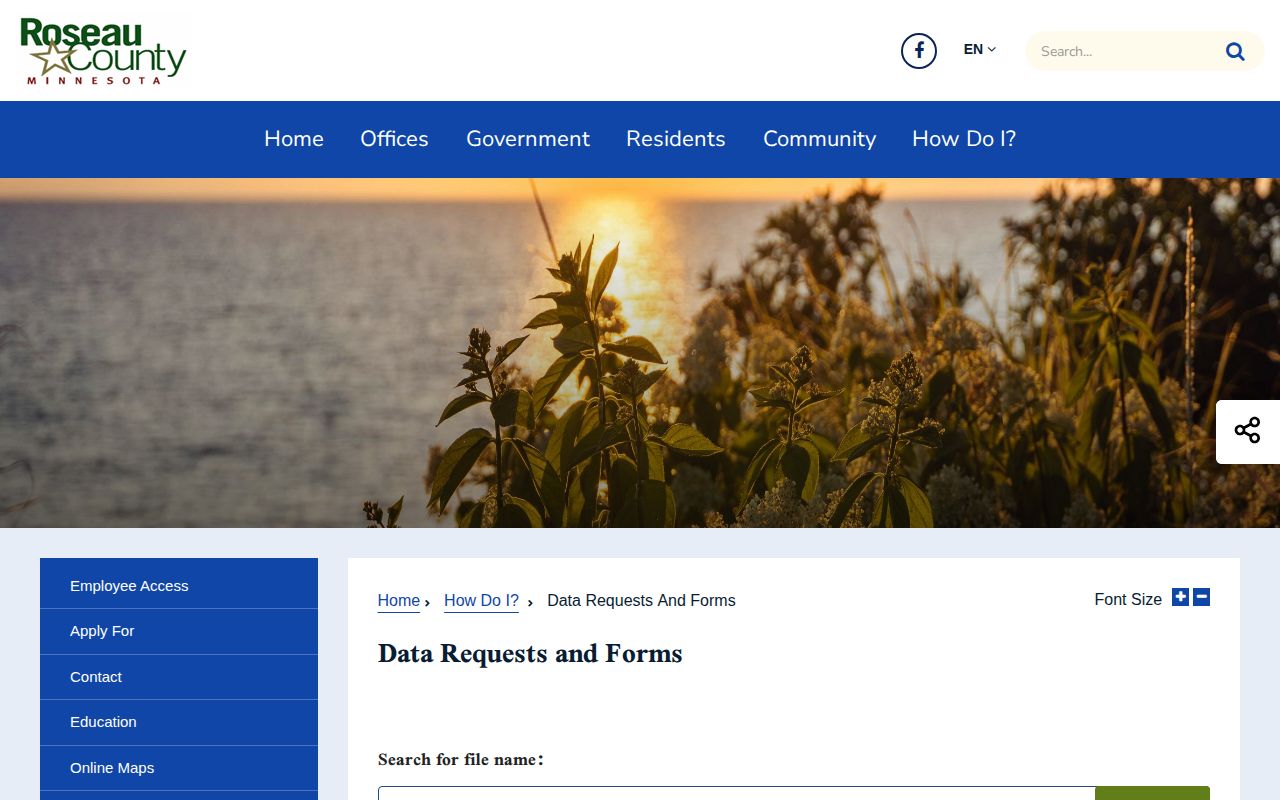
- Use the county Data Requests and Forms page for the defined date range and record type.
- Search Minnesota Court Records Online for a later public case, hearing, or judgment, observing its pending-case limits.
- Use local reporting only as a lead, then verify every name, date, charge, release, and disposition.
Build your Roseau County arrest record request in strict date order. Booking time, release time, and the first court appearance can each land on a different day. Keeping the dates straight keeps the timeline honest. The county forms page provides the official records-request entry point.
This is the durable route when the live custody list has rolled forward.
Fields in a Roseau Arrest Report
What goes into a Roseau County arrest report? Minnesota law names the public adult arrest-data categories. Older roster pages hint at other booking fields that have appeared over time. Treat these as categories to request and verify, not columns promised on any screen.
| Field | Why it matters |
|---|---|
| Date, time, and place | Separates the event from later intake or posting. |
| Arresting agency | Identifies the likely record custodian. |
| Charge, warrant, or legal basis | Records the charge at arrest; it may later change. |
| Booking or incident number | Helps target a request and distinguish similar names. |
| Custody, transfer, or release | Shows status at a particular time, not case outcome. |
| Photo | May be public under section 13.82, subject to withholding and privacy rules; current display is unverified. |
The Minnesota arrest-data statute governs what counts as public. Juvenile records, victim details, medical facts, and active-investigation material stay protected. A secondary site carrying such data does not make it open.
TRF News as a Roseau Booking Lead
TRF News runs Recently Booked posts. They read like news stories rather than a jail roster. An entry may list the name, age, and booking date of a person arrested in Roseau County, plus the arresting agency, the charge, and any bail or release detail. Pictures often appear too. The pace depends on editors, not a live feed. The dated archive shows how each post is filed, and a Roseau tag filters the coverage. It still cannot promise a complete arrest record for the county.
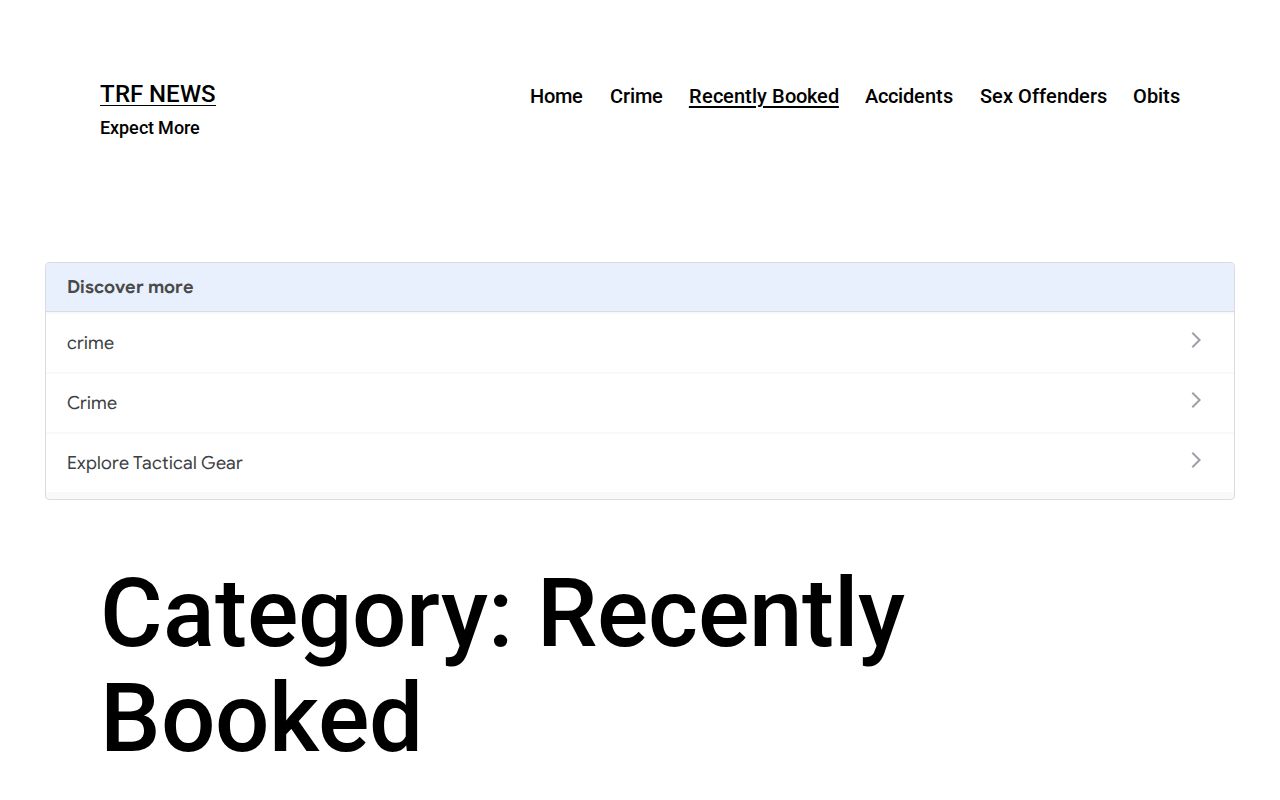
Treat the site as a second timeline of Roseau arrests. It is not the county ledger. Its Roseau County booking tag simply narrows what the publication covers.
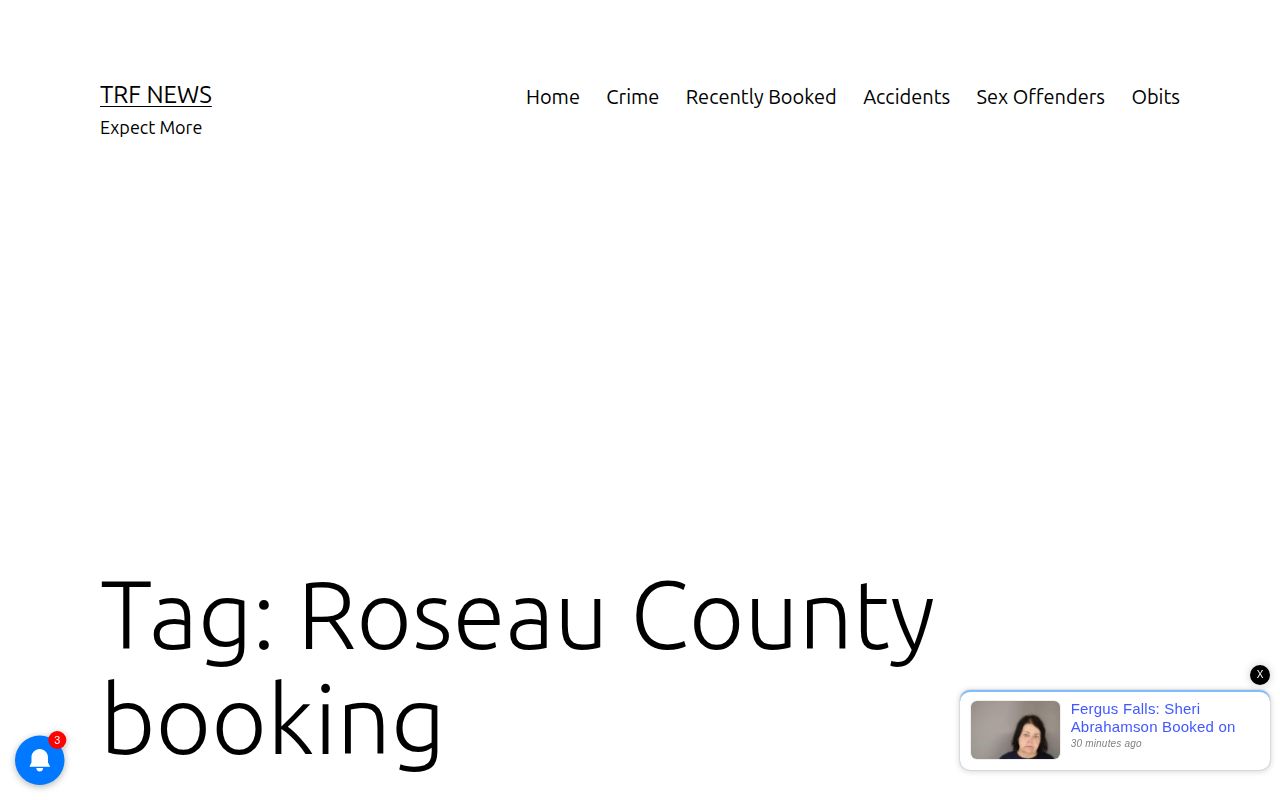
Check every item before relying on it. Match names against the Sheriff, the arresting agency, the requested record, or the court file, and never assume an absent story means no arrest happened.
Older Roseau Arrest Reports and Retention
Four things get confused here. The live jail roster and the underlying government record sit apart. So do the county retention schedule and third-party copies. Minnesota's law-enforcement retention schedule spells out clear categories. Jail registers, daily logs, inmate records, and juvenile records each have one. Whether Roseau County has adopted that schedule is a question for the county itself. Ask the responsible authority what arrest material exists and what is open to the public.
Older reporting has other homes. The Roseau County Historical Society keeps newspapers on microfilm and in bound volumes. Staff-assisted research is available, and fees may apply. The Minnesota State Archives may hold long-term government records that qualify. For how a case ended, turn to MCRO or Roseau County Court Administration at 218-463-2541.
Roseau Newspaper Archives Fill a Different Gap
Newspapers tell a different story than jail rosters. The Roseau Times-Region runs a recurring Court Report alongside its news archive. Both can add context after a Roseau County arrest. But editors choose what gets covered. A story may draw on official reports, probable-cause material, or a booking photograph. Selection is the problem. The archive cannot stand in for a roster of everyone booked during a week.
Older arrests point elsewhere. The Roseau County Historical Society holds microfilm and bound volumes of the Greenbush Tribune, Roseau Times-Region, Warroad Pioneer, Badger newspapers, and other local titles. Confirm its staff-research and nonmember charges before a request. Newspapers record what was published, while the government custodian holds the booking and arrest data that was actually created and retained.
Separate Arrest Dates From Publication Dates
Dates can trip up anyone reading arrest reports. A multi-day log misleads when an article's post date is mistaken for the arrest date. Keep separate fields. Event date, jail intake, publisher date, release or transfer, first hearing, and disposition each mean something different. One date only? Label just that one. Roseau County posts no verified cadence, so drop the assumed weekend delay and the estimated schedule. Agency labels need the same care. A Roseau address does not prove Roseau Police made the arrest, and jail custody does not mean a sheriff's deputy was the arresting officer. Keep dates and agencies honest, and Friday through Monday records compare cleanly.
Verify Roseau Arrest Reports in Court
Minnesota Court Records Online opens the door to public case files, hearing dates, judgments, and court documents. Most documents need a case number first. Name searches for pending criminal matters sometimes require a terminal at the courthouse or a call to court administration. The Roseau daily calendar is a helpful stop, but it lists scheduled events rather than final outcomes.
Precision matters with language here. One person can be arrested, booked, charged, released, acquitted, convicted, or sentenced. Each verb marks a different stage. Anchor every statement to the public record itself.
Roseau Times Reports Are Selective
Newspapers fill in what a roster cannot. The Roseau Times-Region archive adds narrative and later court context through its Court Report column. A booking list never captures that. Still, editors choose what runs and when. So the coverage is not a full arrest chronology for the county. Match any reported result to the right person and the right case. Then you can rely on it.
Timing differs between outlets. TRF News may post near-current booking items while the Times-Region publishes court material later. Neither paper is the official custodian of Roseau County arrest records. Treat a story as a lead. Confirm the date, agency, or case number with law enforcement, the county's records request process, or the Judicial Branch.
Why Agency and Facility Fields Differ
Arrest reports in Roseau County can name many players. City police, sheriff's deputies, State Patrol, DNR officers, tribal authorities, federal agents, and border agencies all make arrests here. The county jail may hold someone another agency picked up. So a city name in a record does not automatically tell you who made the arrest. It may not show where the person sits either.
Federal and state systems live apart from county ones. BOP and ICE each run separate locators. Minnesota DOC tracks adults committed to the Commissioner. A hit in one of those systems does not establish a Roseau County booking. And a county roster proves nothing about later state or federal custody.
Correcting an Old Roseau Arrest Report
Start by figuring out which layer holds the error. An agency controls its own report. A court controls its case record, and a publisher controls its article. Minnesota chapter 609A expungement is a court process with eligibility and notice rules. Sealing is not a guarantee that every web copy vanishes.
Once an official correction or sealing is done, send documentation to the publisher. If the page lingers, a search engine's outdated-content route is the next step. Skip the paid removal brokers. Deleting one site never changes what the government keeps.